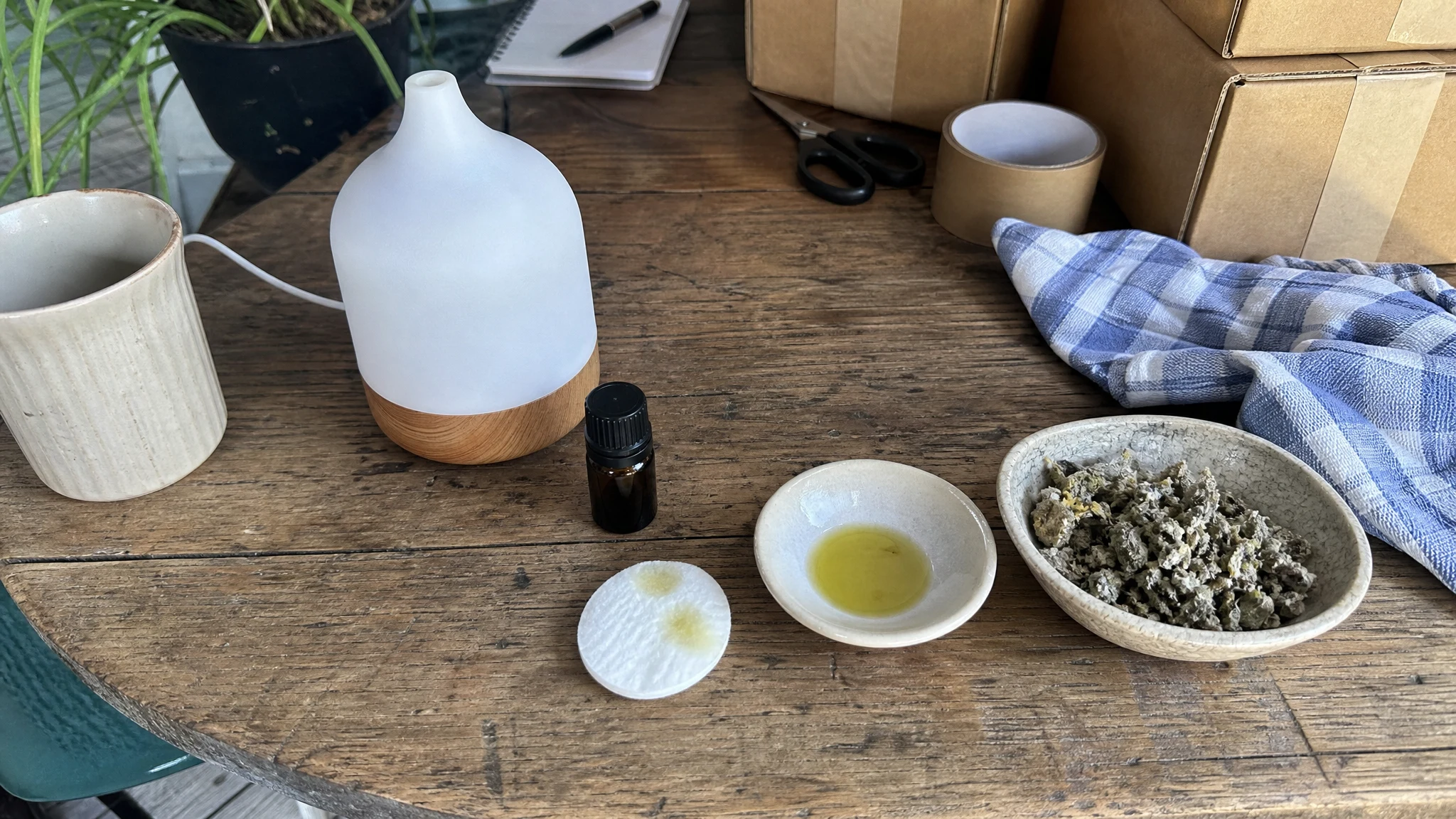
Labdanum Essential Oil Benefits and Everyday Uses
Some scents announce themselves. Labdanum essential oil does the opposite. It settles into a room slowly, like late afternoon light, with a smoky sweetness that people often describe as warm amber. If you have ever wondered what gives certain perfumes and candles their deep, resinous glow, this guide will introduce you to one of the ingredients behind that effect.
Below, you will learn where labdanum comes from, how it is made, what it smells like, and how to bring it into your daily routines. We keep everything educational and grounded in what is known about this aromatic oil.
What Is Labdanum Essential Oil?
Labdanum essential oil is a thick, amber-toned aromatic oil taken from Cistus ladanifer. The shrub is known as rockrose, and it grows across rocky, sun-exposed slopes of the Mediterranean region. It stays low to the ground, and it thrives where the summer sun is strong.
What sets this oil apart is its body. Most essential oils pour thin and clear. Labdanum is viscous, with a heft that reflects the sticky gum it comes from. That density is part of why it behaves so differently from lighter oils in a blend.
Why the name matters
You may see several rockrose-related products on the market. Checking for the botanical name Cistus ladanifer on the label is a simple way to confirm you are looking at the plant described in this guide.
From Rockrose Gum to Amber Oil: How It Is Made
The story starts in summer. Under the heat, the narrow leaves and twigs of Cistus ladanifer exude a dark, fragrant gum. It clings to the surface of the plant, almost like a coating.
That gum is collected and processed through steam distillation. In this method, steam passes through the material and carries the aromatic compounds with it. Once cooled, the oil separates out. For a resin as thick as this one, steam distillation pulls the aromatic oil free from the gum, yielding a viscous, amber-toned liquid.
What the process tells you
- Source material: the gum on the leaves and twigs, not a flower or fruit.
- Method: steam distillation, with no need for added solvents in the description of this product.
- Result: a dense, slow-moving oil with a deep amber tone.
The Aroma Profile
Describing labdanum is a bit like describing a favorite old coat. It is smoky, leathery, and sweet all at once. Many people also notice hints of dried fruit and warm wood underneath.
Top, middle, and base
In perfumery, scents are grouped by how long they last. Labdanum is a base note. That means it appears late and lingers for hours. Because of this staying power, perfumers use it to anchor lighter top notes and keep a fragrance present long after the first impression fades.
A note on intensity
The oil is rich and concentrated. A little goes a long way, so start with a small amount and build up gradually. You can always add more, but you cannot easily take it away once a blend is made.
Aromatic Benefits of Labdanum
When people talk about the benefits of labdanum essential oil, they are usually talking about atmosphere and enjoyment. This is an aromatic ingredient, and its appeal is in the experience of the scent itself.
Creating a warm atmosphere
A few drops warmed in a diffuser give a room a slow, amber-toned background scent. People report that this kind of deep, resinous aroma makes a space feel cozy and settled. That impression is personal and subjective, and scent preferences vary widely from person to person.
Supporting a evening ritual
Many people build small rituals around scent, such as lighting a candle after dinner or diffusing a favorite blend while reading. The smoky sweetness of labdanum may help promote a sense of comfort in these quiet moments. Anecdotal evidence suggests that familiar, grounding aromas become associated with downtime over time.
Lasting presence in blends
One of the most practical aromatic benefits is longevity. Home perfumers use labdanum to extend how long a blend lingers on skin or fabric. In that sense, it works as a fixative that keeps lighter notes from disappearing too fast.
None of this is meant to suggest the oil does anything beyond scenting your space and your crafts. If you have questions about how aromatics fit into your own routine, consult a qualified medical professional.
Everyday Uses at Home
Labdanum is surprisingly flexible. Here are the most popular ways people bring it into daily life.
In a diffuser
Add a few drops to your diffuser and let the warmth spread. Because the oil is thick, it may pour slowly from the bottle. Warm the bottle gently in your hands, and follow the instructions that came with your diffuser. Many people like it for autumn and winter evenings.
In candles
Candle makers mix labdanum into woody or spiced formulas for added richness. It brings a smoky depth that pairs naturally with cedar-style and spice-forward scents. Follow the fragrance load guidance provided by your wax supplier.
In soap
Soap crafters use it in the same way, blending it into woody or spiced recipes. The result is a bar with a soft, resinous character. Always follow a trusted recipe and appropriate usage rates for your soap method.
In home perfumery
This is where labdanum shines. As a base note, it gives a handmade fragrance backbone and helps it last. Start with the base, then layer lighter oils above it.
In an unscented lotion base
It can be stirred into an unscented lotion base for a subtle, lasting warmth. Keep the amount very small, dilute well, and patch test before wider use (see the safety section below).
In a linen spray
A linen spray is a gentle way to add a hint of amber to pillowcases, throws, and curtains. Test on a small, hidden area of the fabric first, since a dark, viscous oil may mark some materials.
Blending Labdanum with Other Oils
Labdanum combines readily with several well-loved aromatics. Each pairing lends a soft, resinous depth.
| Pairs With | What It Adds | Good For |
|---|---|---|
| Sandalwood | A smooth, woody softness | Perfume blends, diffuser mixes |
| Oakmoss | An earthy, forest-floor depth | Home perfumery, soap |
| Vanilla | Extra sweetness and a cozy feel | Candles, linen sprays |
| Frankincense | A resinous, airy lift | Diffuser blends, candles |
Blending tips
- Begin with one drop of labdanum, then add partners.
- Let a new blend rest before judging the final scent.
- Write down your ratios so you can repeat a favorite.
- Keep the labdanum as the anchor and let lighter oils sit on top.
Safety, Dilution, and Choosing Quality
Essential oils are concentrated. Treat every bottle with care, and keep these guidelines in mind.
Safe use basics
- Dilute: never apply undiluted oil directly to skin. Blend it into an unscented carrier such as a lotion base, and keep the amount small.
- Patch test: apply a small amount of your diluted blend to a limited area and wait before wider use.
- Keep away from eyes and sensitive areas.
- Do not ingest essential oils.
- Pregnant, nursing, taking medication, or caring for children and pets? Speak with a qualified medical professional before using essential oils.
- Ventilate: diffuse in a well-aired room and take breaks.
Essential oils are not a replacement for professional guidance, and they should never be used in place of anything your doctor has recommended.
What to look for when buying
- The botanical name Cistus ladanifer on the label.
- A clear note that the oil is steam-distilled from the gum.
- A viscous, amber-toned appearance consistent with the oil described above.
- Dark glass packaging and clear batch information.
Ready to explore? Browse our full collection in the Labdanum Essential Oil shop or return to the home page to discover more amber-toned inspiration.
Storing your oil
Keep the cap tightly closed and store the bottle somewhere cool and out of direct sunlight. Because labdanum is thick, wipe the bottle neck after each use so the cap does not stick.
Bringing Amber Warmth Into Your Routine
Labdanum essential oil asks very little of you. A drop or two is enough to change how a room feels. Whether you diffuse it, blend it into a candle, or anchor a homemade perfume with it, the smoky, leathery sweetness of Cistus ladanifer tends to leave a lasting impression. Start small, experiment with pairings like sandalwood and vanilla, and let your own nose guide the way.