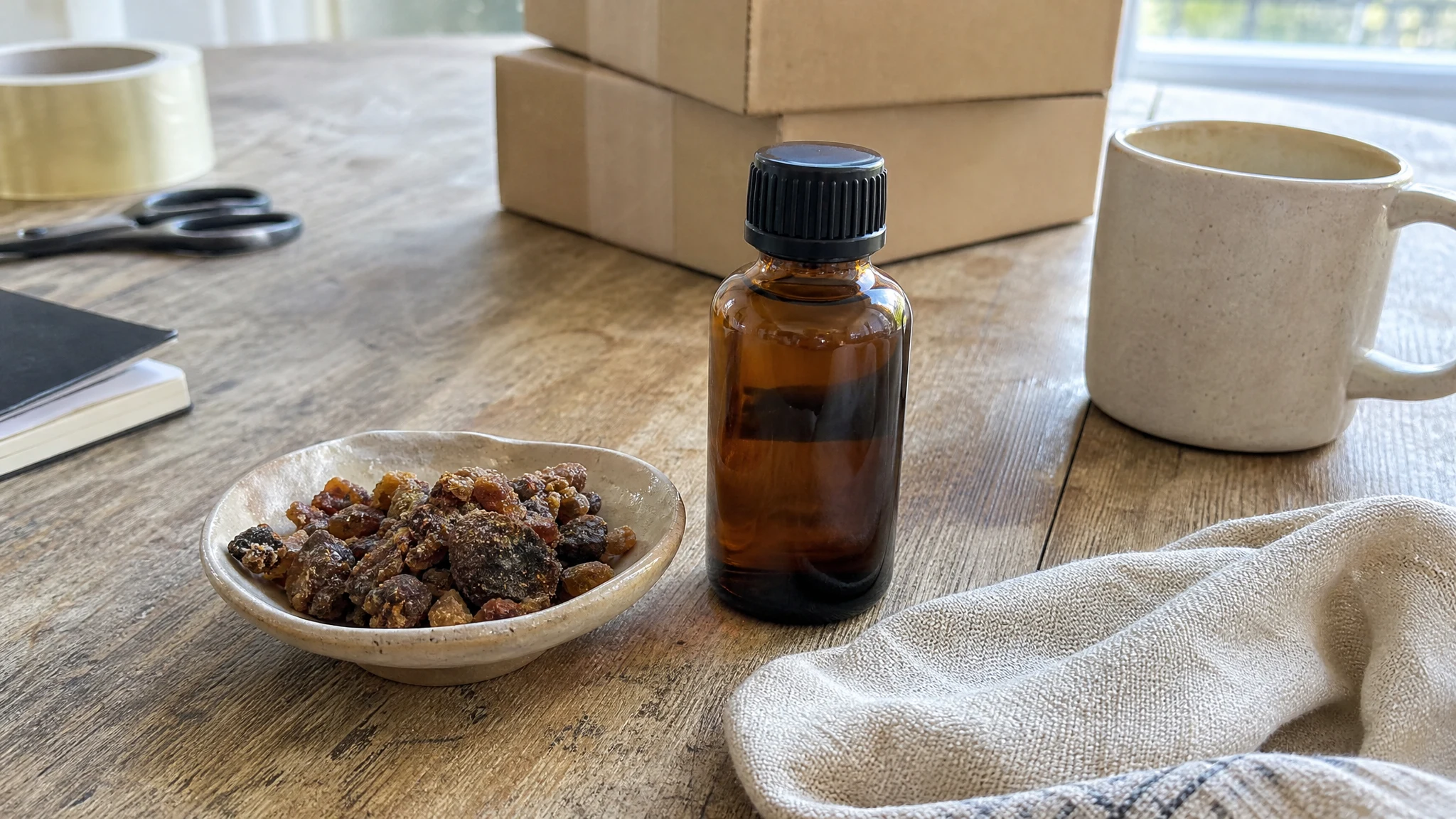
Labdanum Essential Oil FAQ: Common Questions Answered
Labdanum essential oil has a deep, amber character that tends to raise plenty of questions. Here are straightforward answers about where it comes from, how it smells, how crafters use it, and how to handle it with care.
The Basics
What is labdanum essential oil?
Labdanum essential oil is an aromatic oil steam-distilled from the fragrant gum of Cistus ladanifer. It is viscous and amber-toned, with a smoky, leathery, sweet scent. Many people enjoy it as a warm, resinous note in blends.
What is Cistus ladanifer?
Cistus ladanifer is the botanical name for rockrose. It grows as a low shrub across rocky, sun-exposed slopes of the Mediterranean region. Its narrow leaves and twigs are the source of the gum used to make the oil.
Where does the gum come from?
Under summer heat, the plant exudes a dark, fragrant gum that clings to its leaves and twigs. This resin is collected and then processed. It is the starting point for the finished oil.
How is the oil made?
The collected gum goes through steam distillation. This method pulls the aromatic oil free from the thick resin. The result is a viscous, amber-toned liquid.
Aroma and Character
What does labdanum essential oil smell like?
The scent is smoky and sweet, with hints of leather, dried fruit, and warm wood. It is rich rather than sharp. Many describe it as a slow, amber warmth.
Why is it thicker than other essential oils?
Labdanum comes from a dense, sticky gum, so the oil has a body thicker than most essential oils. You may notice it pours slowly from the bottle. A little goes a long way.
What is a base note, and is this one?
A base note is the long-lasting foundation of a fragrance. Perfumers turn to labdanum as a base note because it anchors lighter top notes and keeps a scent present for hours.
Blending and Everyday Use
What blends well with labdanum?
It combines readily with sandalwood, oakmoss, vanilla, and frankincense. Each pairing picks up a soft, resinous depth. Start with one drop of labdanum and adjust to taste.
Can I use it in a diffuser?
Yes. A few drops warmed in a diffuser give a room a slow, amber-toned background scent. Because the oil is thick, clean your diffuser regularly according to its instructions.
Is it good for home perfumery?
Home perfumers use it to extend how long a blend lingers on skin or fabric. Its smoky sweetness adds richness under brighter notes. Always dilute it in a suitable carrier before it touches skin.
Can I add it to candles and soap?
Candle makers and soap crafters mix it into woody or spiced formulas for added richness. It suits cozy, autumn-style scents especially well. Follow the usage guidance of your wax or soap supplier.
Can I stir it into lotion or a linen spray?
It can be stirred into an unscented lotion base or a linen spray for a subtle, lasting warmth. Mix thoroughly and keep the amount small. Test a small batch before making more.
Safety and Handling
Does labdanum essential oil need to be diluted?
Yes. Essential oils are concentrated, and this one is no exception. Blend it into a carrier oil or an unscented base before applying it to skin, and keep it away from eyes.
Should I patch test first?
Always. Apply a small amount of your diluted blend to a discreet area and wait 24 hours. If skin reacts, stop using it.
Is it safe to swallow?
We do not recommend taking labdanum essential oil by mouth. It is intended for aromatic and craft uses only. Speak with a qualified medical professional if you have questions about any essential oil.
What about children, pets, or pregnancy?
If you are pregnant, nursing, or using the oil around young children or animals, check with your doctor or a qualified professional first. Keep the bottle out of reach. When in doubt, skip it.
How should I store it?
Keep the bottle tightly capped, away from heat and direct sunlight. Because the oil is thick, wipe the bottle neck after use so the cap does not stick.
Choosing Your Oil
What should I look for on the label?
Look for the botanical name Cistus ladanifer and a clear note that the oil is steam-distilled. The oil should be amber-toned and viscous, with a smoky, leathery, sweet aroma. Be cautious of anything that smells thin or flat.
Where can I buy it?
You can browse our essential oil collection to find labdanum alongside other warm, woody oils. Our home page has more about what we offer.